Why Sila’s $300M Private Equity Round Signals a Shift in Battery Tech Funding
A battery materials company just pulled $300 million in what the sources label "private equity funding" — not venture capital, not a growth round, but PE money into a pre-commercial silicon-anode play.
That framing alone deserves a second look before anyone starts building portfolio exposure models around it.
Sila's $300M: What the Press Release Actually Says
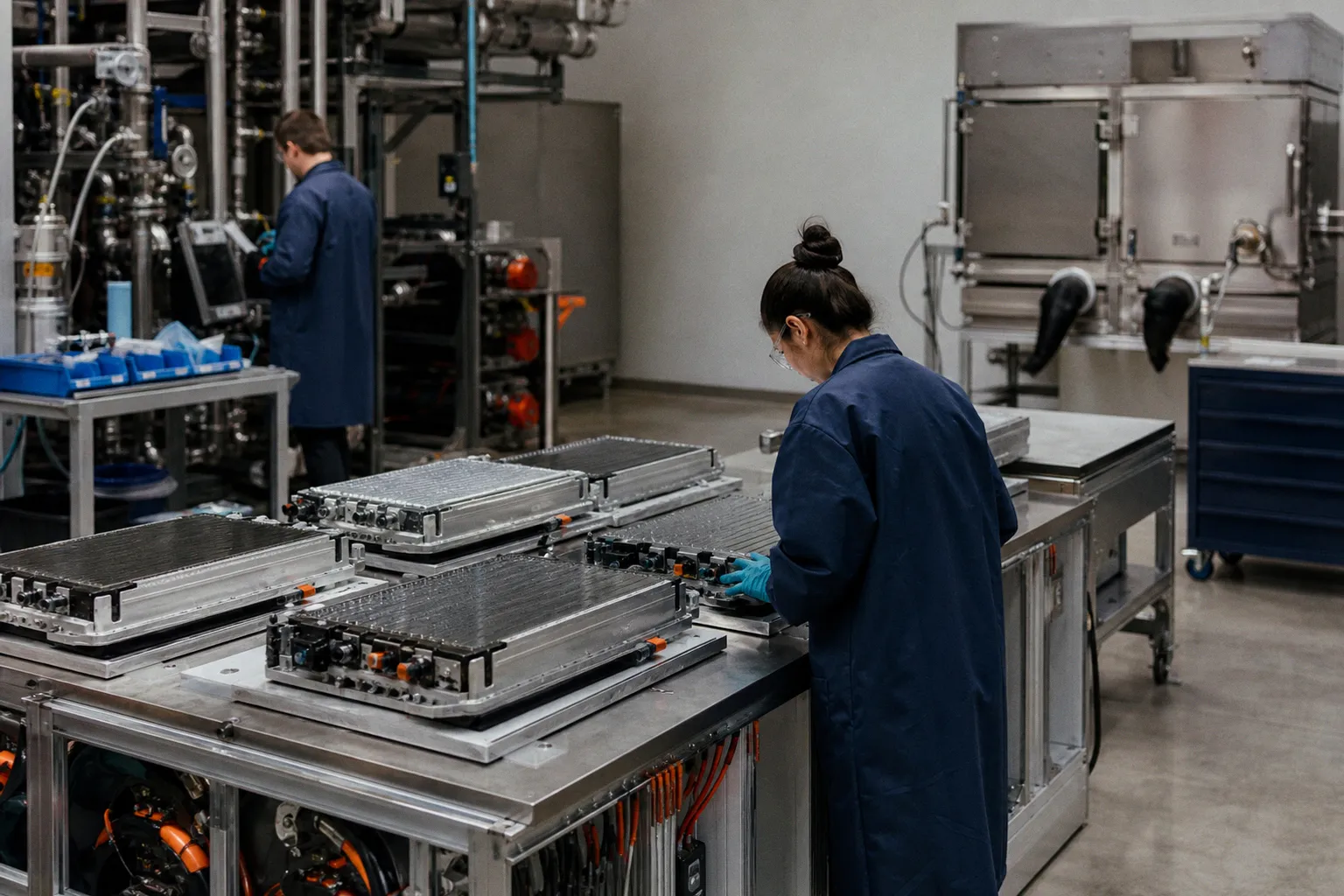
Sila, headquartered in Alameda, raised $300 million in a round led by Atreides Management and Sutter Hill Ventures. The stated use of proceeds: accelerate U.S. production of the company's silicon-carbon anode technology. That's it. No valuation. No revenue run-rate. No production capacity numbers. No timeline beyond "accelerate."
The label "private equity" is doing real work here. Sila is a battery technology company — a sector where most institutional exposure comes through late-stage venture or climate-focused growth funds. Tagging this as PE either signals the company is further along the commercialization curve than the typical deep-tech battery bet, or someone is repositioning the round to anchor a different kind of valuation narrative. Either way, LPs should note the distinction: PE carry structures, return expectations, and liquidity timelines are not the same as venture.
For limited partners tracking cleantech and hard-tech allocation: a $300 million single-asset check into anode chemistry is concentrated risk. The sector thesis (domestic battery supply chain, silicon replacing graphite) is well-established. The question is whether Sila's unit economics and production ramp justify this check size at whatever entry multiple the round implies. Without those data points, $300M is a headline, not an underwrite.
This Week's Broader Deal Flow
Three other confirmed rounds provide useful context on where capital is moving:
- Crystalys Therapeutics (San Diego) — $130M Series B led by Frazier Life Sciences. Clinical-stage biopharma backing late-stage development of gout drug dotinurad. A defined regulatory pathway and a later-stage asset: different risk profile than Sila's materials science play.
- Tikva Allocell (Singapore) — $8M Series A led by Kantharos Capital. Allogeneic EBV-specific T-cell therapy targeting solid tumors. Small check, early stage — classic biotech optionality bet.
- deltaVision (Munich) — €10.2M first round led by KT Ventures and Valemount Capital. Orbital refuelling fluidic systems for spacecraft. Hardware-heavy, long-dated spacetech. Capital-intensive with a distant revenue horizon.
The pattern: big checks are still flowing into hardware-heavy, capital-intensive sectors — batteries, late-stage pharma manufacturing, spacecraft systems. Software multiples may be compressing, but the hard-asset thesis is getting real allocation.
What This Means for Portfolio Construction
The Sila round is the headline, but the signal underneath matters more. Institutional capital is backing domestic manufacturing and supply-chain plays at scale — not just through diversified climate funds but via concentrated single-asset bets.
What's still missing from the Sila picture: current cap table composition, existing production capacity in tangible units, burn rate, and what "accelerate U.S. production" actually means in terms of facility timelines and offtake agreements. Without those datapoints, this round is a conviction signal from Atreides and Sutter Hill — not enough on its own to model return scenarios. Worth watching, not worth chasing on headline alone.