Which funds invest in renewable energy?
funds invest in renewable energy?
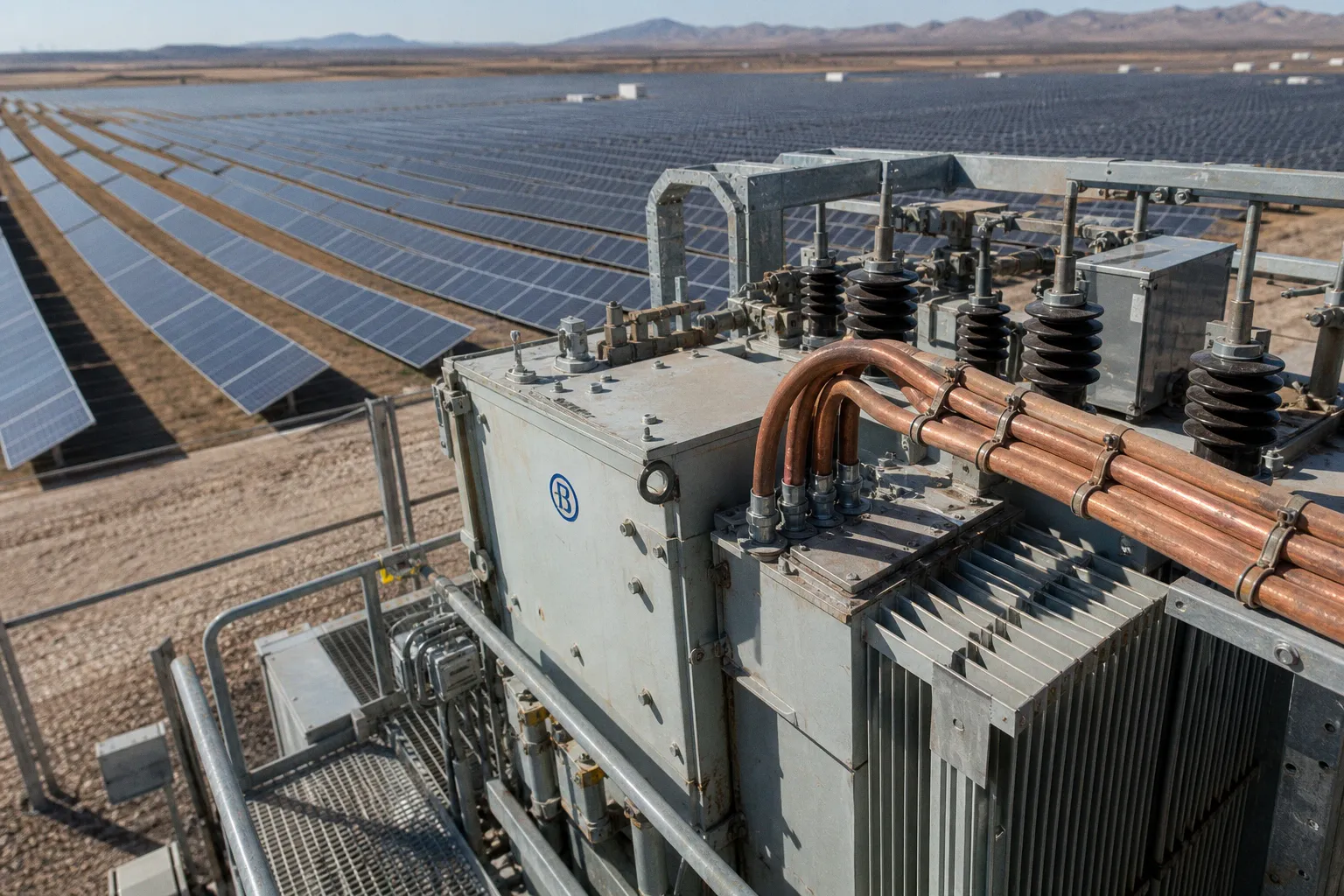
Renewable energy is no longer a narrow allocation to operating wind farms and solar parks. The largest funds investing in renewable energy are now underwriting a much broader physical system: substations, transmission lines, battery cells, grid-scale storage, hydrogen infrastructure, power-to-X plants, and the industrial equipment needed to make intermittent generation usable.
That distinction matters. A photovoltaic project can be built quickly; a high-voltage connection or a four-hour battery system often cannot. In 2026, the binding constraint in many markets is not the availability of capital for generation. It is the availability of land rights, grid capacity, equipment, permitting certainty, and contracted revenue.
Private capital has noticed. Clean-energy-focused funds have raised roughly $178 billion since 2021, with an estimated $92 billion of dry powder still looking for deployment. That is an enormous volume of equity and debt pressing against a project market with very real supply bottlenecks.
The answer to "which funds invest in renewable energy?" therefore has two layers. There are dedicated transition funds built expressly for decarbonisation, and there are large generalist infrastructure vehicles where renewables sit alongside digital infrastructure, transport, utilities, and conventional essential assets. Investors need to understand both, because the asset type may look similar from the roadside while the underwriting logic is very different.
The capital is moving from turbines to systems
The early institutional renewable model was straightforward: acquire or build a solar or wind asset, secure a power purchase agreement, apply leverage, and harvest predictable contracted cash flow. That model remains alive, particularly for operating assets with long-dated offtake. But it no longer describes the whole market.
Today's renewable energy infrastructure funds are increasingly financing the physical links around generation:
- Battery storage that shifts midday solar output into evening peak demand.
- Transmission and distribution upgrades where grid queues have become the practical brake on new capacity.
- Hybrid projects combining wind, solar, and storage behind one grid connection.
- Renewable fuels, hydrogen, sustainable aviation fuels, and power-to-X facilities where commercial demand is developing alongside policy support.
- Repowering programs that replace ageing turbines or solar equipment while retaining a valuable interconnection position.
- Development platforms with teams, land pipelines, permitting capability, and local operating knowledge rather than a single completed asset.
This is why the headline fundraising figures should not be read as a simple bet on more solar panels. Energy transition capital is chasing scarcity in the physical network. A fund can pay a premium for a brownfield renewable portfolio because it comes with operating history and grid access. It can also take greater development risk on a greenfield project because the yield-on-cost may be materially stronger once the asset reaches commercial operation.
The scarce asset is increasingly not the renewable electron. It is the right to connect, store, move, and sell it when the system needs it.
That shift also explains the widening gap between the financial model and the site reality. A spreadsheet may show an attractive merchant-price case for a battery. On the ground, the project still needs transformers, construction crews, local approvals, a viable equipment supply chain, and an interconnection agreement that survives the construction timetable.
The largest funds investing in renewable energy
A relatively concentrated group of global managers dominates flagship fundraising in the sector. Brookfield, Copenhagen Infrastructure Partners, Blackstone, and BlackRock together account for approximately half of private thematic energy transition funds currently in market.
That concentration is not merely a fundraising story. These managers have the capital base to commit early-stage development equity, absorb construction complexity, and write large cheques into platforms that smaller funds cannot readily own.
| Manager | Fund or vehicle | Latest reported scale | Core renewable-energy angle |
|---|---|---|---|
| Brookfield Asset Management | Brookfield Global Transition Fund II | $20 billion final close in October 2025 | Decarbonisation and clean-energy transition at global infrastructure scale |
| Copenhagen Infrastructure Partners | Copenhagen Infrastructure V | More than €12 billion final close in March 2025 | Greenfield energy infrastructure, including renewables and related systems |
| Global Infrastructure Partners / BlackRock | GIP V | $25.2 billion final close in June 2025 | Broad infrastructure, with energy transition among major deployment themes |
| EQT | EQT Infrastructure VI | €21.5 billion raised in March 2025 | Energy transition, decarbonisation, and digital infrastructure |
| KKR | Global Infrastructure Investors V | $17.2 billion raised by Q1 2026 | Global essential infrastructure, including transition assets |
| TPG | TPG Rise Climate II | More than $6.2 billion raised by August 2025 | Climate growth equity across scaling decarbonisation businesses |
| Macquarie Asset Management | Green Energy Transition Solutions | More than $3 billion in fund and co-investment commitments | Transition assets beyond mature wind and solar |
Brookfield's Global Transition Fund II is the clearest signal of the sector's institutional scale. Its $20 billion close in October 2025 exceeded the $15 billion raised for its predecessor, making it the largest dedicated private fund for the clean-energy transition at that point. A vehicle of this size needs sizeable, repeatable deployment opportunities. It is naturally drawn to platform investments, corporate carve-outs, utility-scale portfolios, and infrastructure businesses with multiple expansion phases.
Copenhagen Infrastructure Partners remains particularly associated with greenfield development. Copenhagen Infrastructure V closed above €12 billion in March 2025, and the manager launched fundraising for Copenhagen Infrastructure VI in 2026 with a €16 billion target. That matters for developers and equipment suppliers because greenfield capital behaves differently from a buyer of operating assets: it has to engage with permitting, construction sequencing, local counterparties, and the uncomfortable reality that a project schedule is often decided by one missing component or permit condition.
GIP V, closed at $25.2 billion after BlackRock acquired Global Infrastructure Partners in 2024, now sits within the BlackRock platform. EQT Infrastructure VI and KKR Global Infrastructure Investors V are not pure renewable-energy funds either. But their mandate breadth can be an advantage in the transition. The future grid is tied to data centres, industrial demand, ports, transport networks, and regulated utilities. A manager able to assess those linked systems can sometimes see value where a narrow clean-tech mandate sees only complexity.
TPG's Rise Climate II belongs to a different part of the market. It had raised more than $6.2 billion by August 2025 toward an $8 billion target, following the $7.3 billion Rise Climate I fund raised in 2022. This is closer to growth equity than classic contracted infrastructure: investing in companies and technologies that need capital to scale rather than simply acquiring an established physical asset.
Dedicated transition capital and generalist infrastructure are not interchangeable
It is tempting to group every large infrastructure fund under the renewable label. That creates a misleading picture.
Dedicated green energy private equity vehicles usually begin with a decarbonisation mandate. Their investment teams are structured to evaluate technology pathways, carbon-intensive industrial processes, renewable build-out, and the policy frameworks that make projects bankable. They may accept development risk or emerging-technology exposure that a conventional core infrastructure fund would avoid.
Generalist infrastructure funds approach the same assets through the lens of essential services, durable cash flows, and strategic positioning. They can invest in renewable generation, but they may also deploy to fibre networks, airports, transport concessions, water systems, and regulated utilities. The renewable component may be substantial without being exclusive.
The practical difference often appears in three places:
1. Risk appetite at the development stage. Dedicated transition funds are often prepared to underwrite a project before it is fully de-risked, especially when they have in-house development capability. Broad infrastructure funds may favour later-stage or operating assets, although this varies sharply by manager and transaction.
2. Technology exposure. A transition mandate can accommodate storage, hydrogen, renewable fuels, and industrial decarbonisation pathways earlier in their maturity curve. A generalist fund may require more established revenue visibility.
3. Portfolio construction. A pure transition fund needs exposure across climate solutions. A diversified infrastructure vehicle can balance a riskier renewable platform with regulated or contracted assets elsewhere in its portfolio.
Neither approach is automatically superior. An investor seeking long-duration contracted cash flow may prefer a mature operating renewable portfolio held by a broad infrastructure manager. An investor comfortable with construction and development risk may find more upside in a specialist greenfield strategy.
Storage and grid assets are becoming the real underwriting test
Wind and solar remain the most visible parts of the market. They are also increasingly the easiest parts to model badly.
High levels of renewable generation can compress captured prices during hours when many similar assets produce at once. A solar portfolio may have a strong annual production profile but weaker realised revenue if it sells most of its power into a saturated midday market. This is where co-located storage, flexible offtake structures, and grid access become central to value.
A battery is not simply a metal container placed beside a solar farm. Its economics depend on duration, degradation, charging rights, market rules, dispatch strategy, augmentation capex, and the local spread between low-price and high-price periods. The asset earns its place by solving a system problem, not by carrying a green label.
Grid investment is even more physical. Transmission projects require corridors, easements, public engagement, specialist contractors, and long lead-time components. Distribution upgrades involve regulated frameworks and local network planning. These are slow assets, often frustrating assets, and precisely for that reason they can be valuable.
Macquarie's Green Energy Transition Solutions fund illustrates the broadening mandate. Closed in September 2025 with more than $3 billion in total fund and co-investment commitments, it was structured to pursue transition opportunities beyond mature renewables. That is where the market is moving: away from treating generation as the whole story and toward investing in the wider machinery of electrification.
A renewable portfolio without storage, network access, or a credible revenue route is not an infrastructure strategy. It is an exposure to unresolved system constraints.
This is also the point at which operational discipline matters. Investment committees can become absorbed in energy-price curves and debt sizing while the operating team is dealing with contractor fatigue, community resistance, delayed switchgear, or a developer whose permitting assumptions were optimistic. Clear decision-making under that pressure is an asset-management capability in its own right; resources on cognitive effectiveness and sustained focus are more relevant to infrastructure teams than they may first appear.
Green credit is filling a financing gap that equity cannot solve alone
Equity gets the headlines, but debt is becoming more important in clean energy investment vehicles. Many projects are too mature for high-return development equity yet not conventional enough for banks to lend aggressively against construction, merchant exposure, or complex technology risk.
That gap is where green credit strategies are gaining ground.
Copenhagen Infrastructure Partners raised €1.3 billion at the first close of CI Green Credit Fund II in March 2026, targeting €2 billion for senior secured lending to renewable energy and transition projects. The vehicle is a useful marker of market evolution. There is now enough project volume, asset complexity, and sponsor demand to support specialist private credit alongside equity funds.
For developers, this can mean more flexible financing during construction or at the point of refinancing. For equity investors, it can reduce the amount of expensive common equity tied up in a project. For lenders, it offers security over physical assets and contracted revenue streams, but only if the documents properly allocate construction, curtailment, resource, and counterparty risk.
Private credit is not a painless substitute for bank finance. Senior secured debt still requires a credible asset, disciplined covenants, and a repayment story that holds under downside cases. But it can be well suited to a market where banks may be selective and project needs do not fit a standard template.
The larger point is that energy transition capital is becoming layered:
- Development equity funds finance the risky work of land control, permits, early engineering, and pipeline formation.
- Infrastructure equity funds own or build assets through construction and operations.
- Growth equity funds support companies that manufacture, optimise, aggregate, or service transition assets.
- Green credit funds provide secured financing where traditional lending capacity or flexibility is insufficient.
- Co-investment capital allows very large platforms and portfolios to be acquired without forcing a single flagship fund to carry the entire exposure.
That financial layering is healthy when it matches the physical maturity of the asset. Problems begin when capital marketed as patient infrastructure equity is asked to carry venture-like technology risk, or when lenders assume a still-forming revenue model behaves like a contracted utility asset.
What the 2026 fundraising pipeline says about asset pricing
The fundraising calendar remains large. EQT has set a €21 billion target for EQT Infrastructure VII, while CIP is seeking €16 billion for Copenhagen Infrastructure VI. KKR's Global Infrastructure Investors V had reached $17.2 billion by the first quarter of 2026, with a $20 billion target. TPG Rise Climate II remained in market after passing $6.2 billion. These are not small marginal pools of capital; they are large buyers preparing to compete for limited investable platforms.
The immediate consequence is likely to be continued pressure on high-quality operating portfolios, especially those with one or more of the following characteristics:
- A proven operating record rather than a purely projected output curve.
- Valuable grid interconnection already secured.
- Long-duration offtake or a sophisticated route to market.
- Storage or hybridisation potential that can improve future revenue.
- A development team capable of adding projects around the existing asset base.
- Land, permits, and local relationships that cannot be recreated quickly.
But the market is not uniformly expensive. There are still areas where capital is less abundant than headlines suggest: early-stage development equity for technologies still proving themselves, small and fragmented portfolios that do not justify a fund's deployment overhead, transmission-adjacent assets requiring specialist construction partners, repowering programs that demand deep operational familiarity with existing sites, and projects requiring technology that has not yet reached commercial scale in its target jurisdiction. For investors with the patience and operating depth to enter those niches, pricing is more attractive than the flagship-fund narrative implies.
That bifurcation is the real story of 2026. The headline infrastructure vehicles will continue to absorb scarce operating platforms at premium multiples. The next layer of returns, however, will come from managers willing to underwrite the unglamorous work of grid integration, storage build-out, repowering execution, and the development pipelines that today look too messy for the largest funds to touch. Clean energy investment vehicles are not converging on a single model. They are splitting into distinct strategies, each with its own underwriting discipline and its own definition of what counts as an investable transition asset.