Infrastructure investment fund: core structures and asset types
An infrastructure investment fund is often described as a way to own “essential assets.” That phrase is directionally right and operationally incomplete.
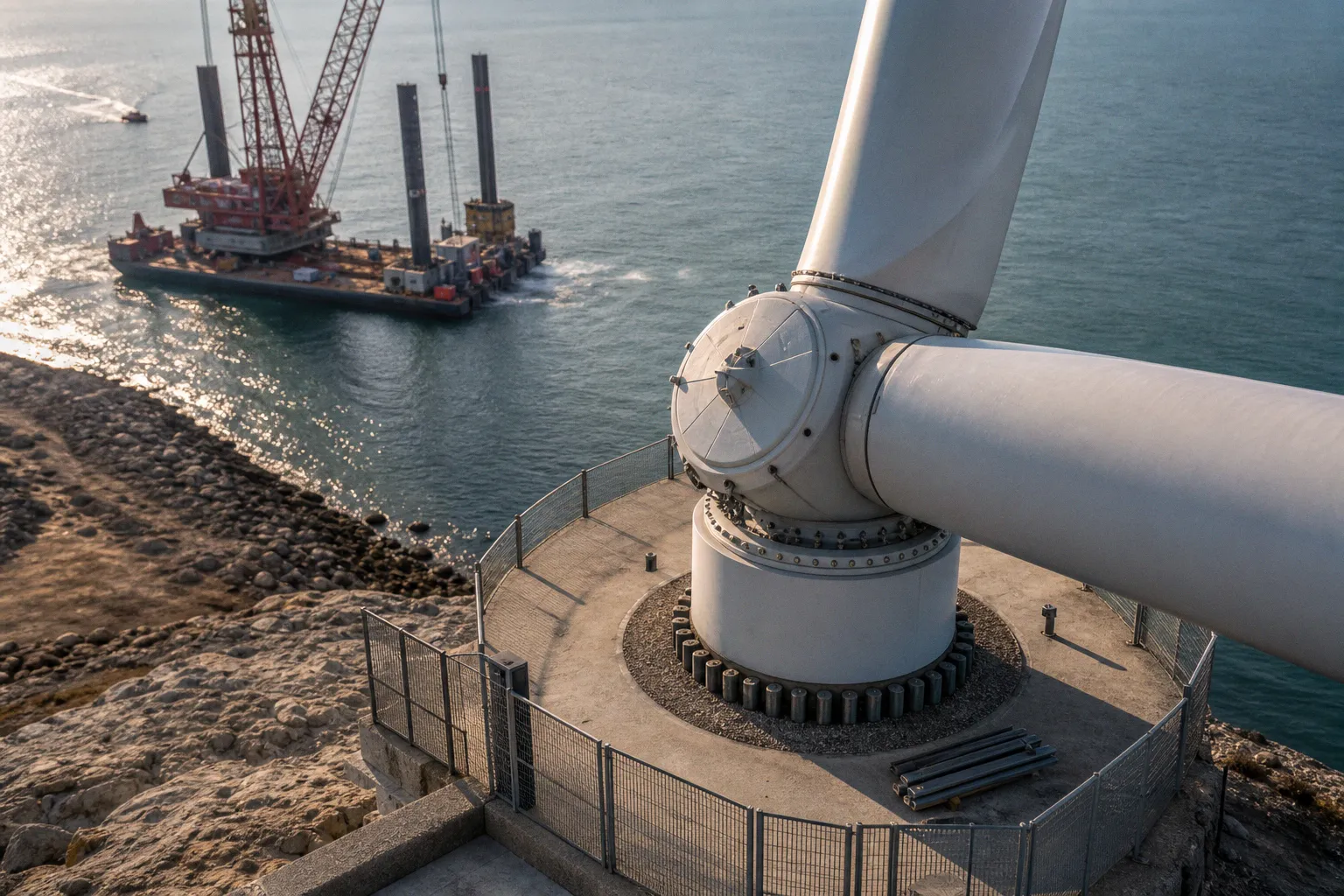
A transmission line, wastewater plant, fibre network or logistics terminal may be physically indispensable, but the investment outcome is shaped by far more than the asset’s usefulness. It depends on the concession, offtake agreement, tariff regime, construction package, debt stack, maintenance plan and the party carrying each operational risk.
The physical asset is only one layer. The fund is the vehicle that gathers capital, controls decisions, calls money when the concrete has to be poured, and eventually returns proceeds when the asset is refinanced or sold.
For an investor, the practical question is not simply, “Does this fund own infrastructure?” It is: what exactly does it own, at what point in the asset’s life, under which contract, and with which risks still sitting in the structure?
Infrastructure is not a single asset class in the field. It is a collection of physical systems whose cash flows are built contract by contract.
How an infrastructure investment fund is built
Most private infrastructure funds use the familiar private-fund architecture: a manager raises commitments from multiple investors, who become limited partners, while the general partner or affiliated manager selects assets, arranges financing, oversees governance and manages exits.
The limited partnership agreement is not back-office paperwork. It sets the working rules of the capital structure: when capital can be called, how fees are paid, how profits are shared, what transfer or withdrawal rights exist, and where the manager’s discretion begins and ends. In a long-lived asset strategy, those provisions matter because the physical timetable is rarely as tidy as an investment committee model.
A greenfield substation can face permitting delays. A road concession can require a redesign after geotechnical work. A fibre build can encounter access constraints on the last mile. The fund needs committed capital because the project will not wait for every investor to decide whether the next drawdown feels convenient.
Private infrastructure funds can obtain exposure in several ways:
- Direct equity ownership, where the fund acquires an interest in the company or special-purpose vehicle that owns and operates the asset.
- Infrastructure debt, where the fund lends against the project or operating asset rather than taking the residual equity risk.
- Co-investment or consortium structures, where several institutional investors and strategic parties own stakes alongside the fund.
- Fund-of-funds or vehicle-through-vehicle exposure, where the investor has another layer between its capital and the underlying physical asset.
- Platform ownership, where the fund buys an operating company with a repeatable development or acquisition pipeline rather than a single concession or plant.
The distinction is not semantic. Equity can capture upside from better operations, expansion and repricing, but it absorbs residual downside. Debt sits higher in the capital stack and has different protections, covenants and recovery mechanics. A fund holding a portfolio of contracted renewable assets through equity is not doing the same work as a lender financing those same assets.
This is why “private infrastructure funds” should be read as a broad legal and commercial category, not as one uniform product. There is no globally binding definition that fixes their term, fee structure, leverage limit or target return. The label tells an investor where the manager intends to work. It does not yet explain how the risk is contained.
What does “core” mean in infrastructure fund management?
Core is the most commonly used entry point, and also the label most likely to be overread.
In broad market practice, Core infrastructure is associated with lower relative risk and an emphasis on stable cash flow. The asset is generally operating, its physical condition is understood, and its revenue framework has more visibility than a development-stage project. Think of a mature regulated utility network, an established communications asset with contracted customers, or a transport facility operating under a long-term concession.
But Core is not a regulated badge, and it is not a promise of smooth distributions. A water asset can be physically mature while facing a tariff review. A data infrastructure asset may have strong occupancy but require substantial capital expenditure to remain competitive. A port can have a long concession and still be exposed to volume, political or environmental pressures.
The usual strategy labels are useful as a first map:
| Strategy | Typical physical starting point | Primary return engine | Risk profile in practice |
|---|---|---|---|
| Core | Established, operating assets | Existing cash flow and disciplined asset stewardship | Lowest relative risk, but still exposed to regulation, operations and financing |
| Core Plus | Operating asset with defined improvement runway | Contract optimization, expansion, operational upgrades or selective development | Low to moderate risk |
| Value-Add | Assets needing material intervention | Reconfiguration, upgrade, repowering, commercial repositioning | Moderate to high risk |
| Opportunistic | Development, repurposing or complex situations | Development gain, major transformation or distressed entry | Highest relative risk |
The categories overlap. They should not be treated as four sealed boxes. A fund can buy a brownfield power asset as Core, then move into a more Value-Add posture by funding battery storage, grid upgrades or a material repowering program. The physical asset has not changed its address, but its risk profile has changed because the capital plan has changed.
That is the point where investment memos can become deceptively clean. The model may show an attractive yield-on-cost once the upgrade is complete. On site, the question is whether the outage window is achievable, whether the contractor can deliver, whether replacement equipment has a credible lead time, and whether the revenue contract still supports the work.
A Core asset is not an asset with no problems. It is an asset whose remaining problems are meant to be understood, priced and managed.
For infrastructure equity funds, the useful diligence question is: which component of cash flow is already in place, and which component still has to be earned? Existing contracted revenue, merchant exposure, uncommitted expansion capital and refinancing assumptions should not be blended into a single reassuring headline yield.
Greenfield and brownfield: the lifecycle changes the cash flow
The cleanest physical dividing line in infrastructure is often the asset lifecycle.
A greenfield project is a first-time asset at a particular site. It may still be in planning, development, financing or construction. Capital goes out before the facility is operating, and investors generally do not receive initial capital back until the asset is operational. This is the familiar private-equity-style J-curve in physical form: early drawdowns, negative or limited cash yield during build-out, then an attempt to convert construction work into a durable operating asset.
A brownfield asset is already operational, or it has a predecessor asset at the site. The work may involve reconstruction, renovation, expansion or modernization. Brownfield does not automatically mean low risk. It means the investor is starting with an existing physical footprint, operating history or installed system.
The distinction matters because each stage carries different bottlenecks.
Greenfield: risk arrives before revenue
Greenfield projects concentrate uncertainty in the period before commissioning. The risks tend to be tangible and sequential:
1. Site control and permitting. A well-designed project cannot operate on land it cannot access, connect or permit.
2. Engineering and procurement. Equipment availability, technical specifications and supplier reliability often determine whether a budget survives contact with reality.
3. Construction execution. Labour availability, weather, ground conditions and contractor performance can move the completion date.
4. Grid, network or transport connection. A completed facility without an effective connection is not yet a cash-generating asset.
5. Commissioning and performance testing. Mechanical completion is not the same as commercial operation.
6. Revenue activation. The offtake agreement, availability payment or tariff regime has to begin producing cash under the terms assumed in underwriting.
This is why greenfield capital requires patience even when the end asset is intended to be Core-like. A future operating solar project may eventually have contracted revenues. During development, however, it is exposed to construction, connection, counterparty and financing risk.
Brownfield: operating history helps, but it does not replace diligence
Brownfield investment begins with more evidence. There may be maintenance records, production data, customer churn figures, outage history and established relationships with regulators or public counterparties. That evidence is valuable; it is not self-validating.
On a brownfield acquisition, I would want to understand the physical condition beneath the reported operating figures. Deferred maintenance can make a stable-looking distribution profile brittle. A network may be technically functional but carrying a capital backlog. A renewable facility may be producing as expected while approaching an equipment replacement cycle that was barely reflected in the seller’s model.
A brownfield investment strategy should therefore separate three things:
- the cash flow that comes from the existing asset;
- the capital expenditure needed merely to preserve that cash flow;
- the growth capital required to expand, improve or reposition the asset.
Mixing maintenance capex with growth capex is one of the easier ways to overstate distributable cash. Steel corrodes, cables age, roads need resurfacing and pumps fail. The spreadsheet needs to respect that physical fact.
Which assets actually belong inside infrastructure?
Infrastructure sector boundaries are wider than many portfolios suggest. A useful institutional framework includes transport, utilities and energy, communications, and social infrastructure. Within infrastructure equity, the working universe can include energy generation, transmission and distribution, telecommunications, water, and social assets.
In practice, the asset’s physical role and contractual framework matter more than a marketing label.
Energy and utility systems
This category includes generation, electricity transmission and distribution, gas or other utility networks where applicable, water supply and wastewater treatment. Renewable generation may be divided into solar, onshore wind, offshore wind and other technologies, but the investment case turns on more than technology type.
A solar site with a long-term power purchase agreement, a sound interconnection and a credible operations contractor has a different risk profile from a solar development holding land rights but awaiting a grid queue decision. Both may be called energy transition infrastructure. Only one may be producing cash today.
Digital infrastructure
Fibre networks, towers, data-related facilities and other communications systems are increasingly central to infrastructure allocations. Yet this is an area where occupancy friction and technology requirements need careful reading.
A fibre route can look attractive at the network level while the economics of connecting marginal customers remain difficult. A data facility may have contractual revenue but face power availability constraints, cooling requirements or concentrated customer exposure. Digital does not make the underlying investment less physical; it often makes the dependency on reliable power, land and permissions more obvious.
Transportation and logistics
Roads, rail-related assets, ports, airports, terminals and logistics infrastructure can produce long-lived revenue, but the revenue model varies sharply. Availability-based payments, regulated charges, volume-linked concessions and commercial leases transfer risk in different directions.
A transport asset with a 25- to 30-year concession is not automatically protected from every economic cycle. The concession length provides a framework for the relationship; it does not eliminate demand risk, maintenance obligations or political scrutiny around pricing.
Social infrastructure
Schools, hospitals, civic facilities and similar public-service assets may fall within the infrastructure universe when the contractual structure supports a long-term asset or service arrangement. Here, the building itself is only part of the story. Performance standards, lifecycle maintenance, handback obligations and the public counterparty’s payment mechanism deserve equal attention.
Commercial real estate, timberland and agriculture can be adjacent real-assets strategies, sometimes held by the same manager, but they should not be automatically folded into infrastructure. A warehouse is not infrastructure simply because it is useful to logistics. Farmland is not infrastructure simply because food supply is essential. The mandate, physical function, revenue framework and jurisdictional taxonomy need to support the classification.
The same caution applies to “green infrastructure.” There is no single global threshold that makes an asset green. Different taxonomies use different criteria, and some depend on asset-level emissions or other technical thresholds. The label needs evidence, not colour coding.
Where public-private partnerships fit — and where they do not
Public-private partnerships are a major route through which private capital enters social, transport, water and utility projects. But a government relationship alone does not create a PPP.
A proper PPP is a long-term contract between a public entity and a private party to provide a public asset or service. It involves significant private management responsibility and risk, with remuneration linked to performance. The practical principle is simple: risk should sit with the party best able to manage it.
That allocation is the real asset.
If the private operator controls lifecycle maintenance and is paid for availability, then maintenance quality, service reliability and handback condition become central to equity value. If it is paid on demand or usage, the investor must understand who bears volume risk. If a public authority retains a particular risk in theory but has weak implementation capacity, the contract language may offer less protection than the model implies.
For a fund manager, PPP underwriting is therefore part legal review, part engineering review and part operational realism. The contract may state that deductions apply for unavailable lanes, failed equipment or missed service levels. The operator still has to mobilize crews, source parts and keep the asset functioning in difficult conditions.
Why valuation remains a judgement, not a quote
Private infrastructure is not marked every second by a public exchange. That makes valuation necessary, but it does not make reported net asset value a tradable market price.
Where IFRS 13 applies, fair value is framed as an exit price: the amount that would be received to sell an asset, or paid to transfer a liability, in an orderly transaction between market participants at the measurement date. In plain language, the valuation needs to reflect what a market participant would assume about the asset and its risks — not simply what the current owner hopes to achieve.
For an operating infrastructure asset, that means pressure-testing the inputs that connect physical performance to financial value:
- remaining concession or contract life;
- tariff assumptions and regulatory reset exposure;
- volume, availability or utilization performance;
- operating and lifecycle maintenance requirements;
- capital expenditure timing;
- debt refinancing conditions;
- discount rates and comparable transaction evidence;
- terminal-value assumptions once the explicit forecast period ends.
The final item is frequently where the most weight sits. A model can appear conservative in the early years while relying on a generous terminal assumption that is difficult to support in a real sale process.
There is also a timing issue. Physical conditions can deteriorate or improve between valuation dates. A delayed connection, a failed component, a revised environmental requirement or a contract dispute may alter value before the next formal appraisal catches up. Good infrastructure fund management keeps an operating dialogue between asset teams, technical advisers and valuation personnel rather than treating the quarterly valuation process as a separate finance exercise.
The durable question behind the fund label
An infrastructure investment fund can offer exposure to physical systems that communities and businesses use every day. That is its appeal. The same fact is why the work cannot be reduced to a broad thesis about “essential services.”
The asset must be built, connected, maintained, insured, permitted and financed. Its cash flow must travel through actual contracts. Its value must survive the difference between a spreadsheet forecast and the condition of the steel, cable, land and equipment in the field.
For long-term investors, the strongest infrastructure allocations will be the ones that keep those two views aligned: the financial vehicle must match the physical lifecycle, and the return target must leave room for the asset to be properly operated. That is how capital becomes durable infrastructure rather than merely a claim on it.