Dubai Founders HQ, Antler launch entrepreneur academy to support first-time founders
Dubai Founders HQ and Antler have launched an entrepreneur academy aimed at first-time founders, according to MSN.
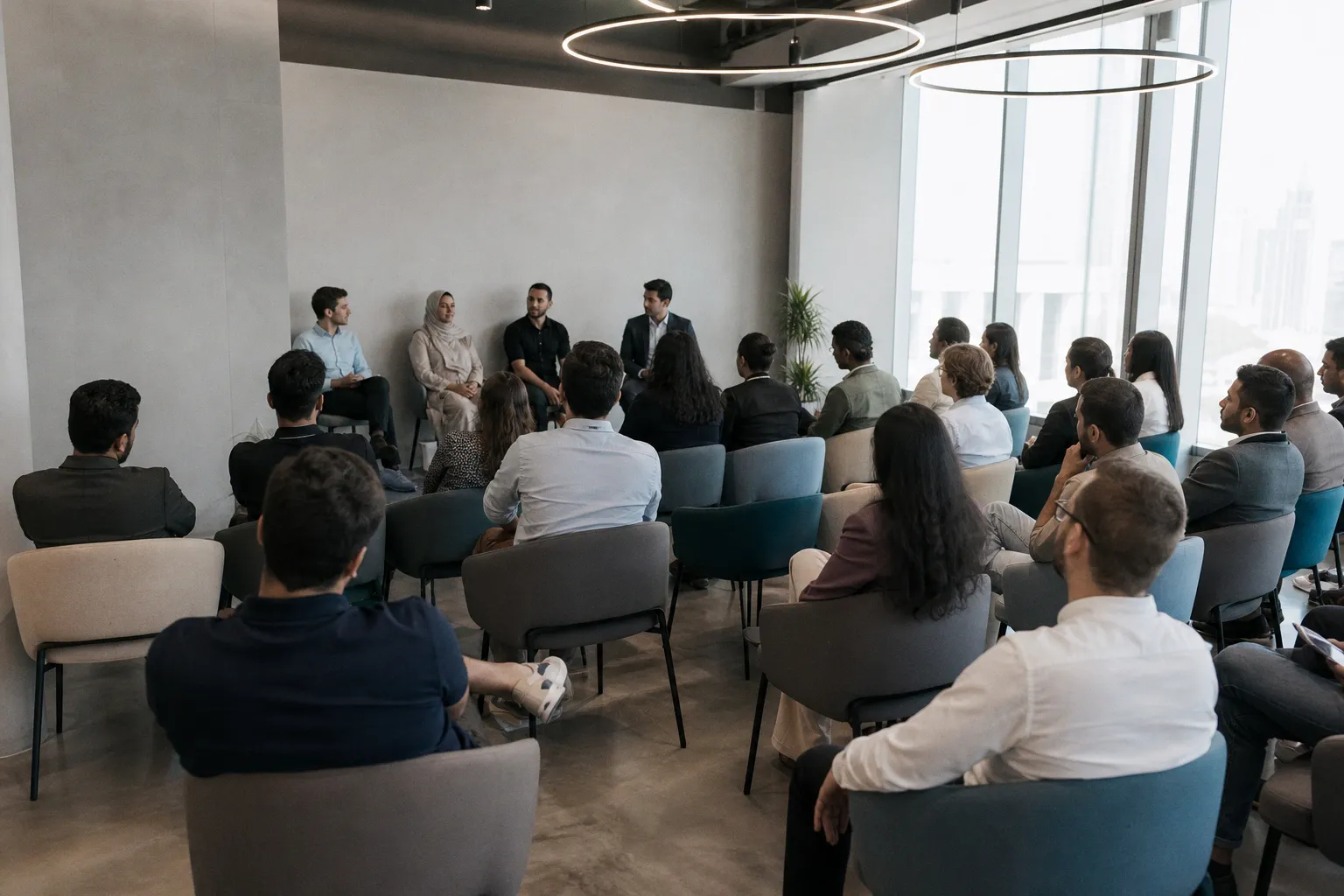
The detail set is thin. No curriculum, cohort size, funding terms, equity model, or selection mechanics are confirmed in the available source material. So treat this as an ecosystem signal, not a priced transaction.
Founder academies are pipeline infrastructure, not charity
The market loves to dress these launches up as “support.” Fine. But in venture terms, an academy for first-time founders is usually about pipeline control.
If Dubai Founders HQ and Antler are putting a structured program in front of new founders, the practical read is simple:
- earlier access to teams before they raise formal capital;
- more standardized founder education before pitch-room chaos begins;
- potential filtering of first-time operators before investors waste partner time;
- a stronger funnel into whatever downstream capital, mentoring, or network access may follow.
That does not mean better companies automatically appear. It means the top of the funnel gets organized. In early-stage venture, that matters because sourcing is still a brutal game of incomplete information, warm intros, and narrative arbitrage.
For LPs watching regional venture exposure, this kind of move is worth noting because it shows ecosystem builders are still investing in pre-seed formation. Not just chasing priced rounds after the hype cycle has done its damage.
The missing terms are the story
The available reporting says the academy is designed to support first-time founders. It does not confirm the commercial structure.
That leaves the key questions unanswered:
- Is participation free, subsidized, or tied to future investment access?
- Does any party receive equity, warrants, advisory rights, or preferential deal access?
- Are founders being trained broadly, or screened into an investment pipeline?
- Who controls selection, mentor access, and follow-on visibility?
- Are there documents founders should sign before or after joining?
Those questions sound dull. They are not. This is where founder-friendly branding can quietly become cap-table gravity.
First-time founders are the most exposed participants in the venture stack. They often optimize for access — mentors, demo days, investor introductions — before understanding what those introductions cost. If the academy is clean education, good. If it carries hidden economics or future rights, the paperwork matters more than the press release.
For investors, the same caution applies in reverse. A slick founder academy can inflate application volume without improving founder quality. More pitch decks are not liquidity. More cohorts are not DPI. The conversion rate into durable companies is what counts, and that is not in the current facts.
Dubai is not the only market building founder funnels
The wider source cluster points to similar founder-ecosystem activity elsewhere. Big News Network reported that MBM Co-founders Club by Marwari Catalysts Group selected its first three startups and plans to open the next batch soon. TICE News reported that India’s young startup founders are reshaping the startup ecosystem. Fintechbiznews.com reported that AIM is boosting the innovation ecosystem in Eastern India.
Different markets, same underlying pressure: create more founders, earlier, and push them through structured programs before capital gets expensive.
That is not inherently bad. Early founder support can reduce basic failure modes: weak market sizing, messy incorporation, unclear ownership, bad pitch discipline. But venture history is full of accelerators and academies that looked productive on cohort count and thin on realized outcomes.
The metric to watch is not launch volume. It is what happens after the academy: incorporated companies, clean cap tables, institutional follow-on interest, survival beyond the first funding conversation, and whether founders exit the program with leverage or dependency.
Blunt LP takeaway: this is a sourcing signal, not an underwriting signal. Dubai Founders HQ and Antler may help more first-time founders get venture-ready, but until terms, selection standards, and downstream outcomes are visible, nobody should confuse ecosystem activity with risk-adjusted return.